
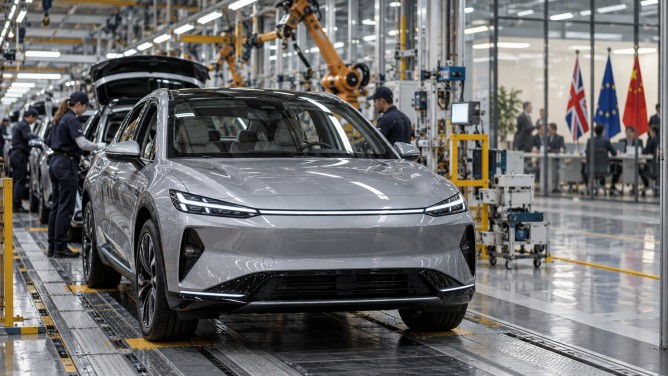
The United Kingdom is considering the imposition of tariffs on electric vehicles imported from China as it explores participation in the European Union’s proposed Made in Europe industrial initiative. This potential step has sparked criticism from Beijing, which argues that such tariffs would constitute discriminatory trade practices against Chinese products.
The UK government has expressed interest in joining the EU’s Industrial Accelerator Act, a measure designed to bolster European manufacturing by prioritizing locally produced goods and tackling competition from subsidized imports. Under a proposal endorsed by France and Germany, the UK might need to align with EU trade defense strategies, including tariffs on Chinese-made electric vehicles that the EU plans to implement in 2024. British officials, however, have emphasized that it is premature to finalize any agreement details, reiterating that the UK intends to maintain its independent trade policy.
China has voiced strong opposition to any new tariffs, asserting that they would violate international trade principles and impede free trade. Chinese authorities have conveyed their concerns to the UK government following reports about potential trade restrictions.
This debate arises as Chinese electric vehicle manufacturers are expanding their footprint in the UK market. UK policymakers worry that failing to join the EU initiative could weaken domestic automotive supply chains and threaten substantial trade volumes. In contrast, participation in the scheme could enable British manufacturers to better compete with lower-priced imports while securing access to European supply chains.
However, imposing tariffs might lead to increased vehicle prices for consumers in the UK and could provoke retaliatory measures from China, potentially impacting British carmakers’ exports to the Chinese market. The UK automotive sector is heavily reliant on exports, with about 80% of cars manufactured domestically being sold overseas. Over half of these exports are destined for the European Union, highlighting the importance of maintaining access to the EU market.
As the EU aims to advance the Industrial Accelerator Act by the end of 2026 or early 2027, discussions regarding the UK’s potential involvement and its trade policy commitments continue. The outcome of these negotiations is expected to significantly influence future UK-EU industrial relations and trade dynamics with China.