
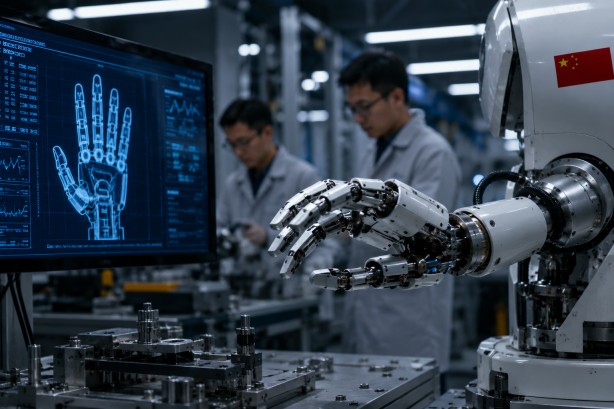
Chinese companies are ramping up efforts to develop advanced robotic hands, a significant hurdle in the progress of humanoid robotics. This innovation is seen as critical, particularly for enhancing the utility of robots in domestic, healthcare, and industrial settings. By integrating artificial intelligence with robust manufacturing expertise, startups in China aim to create robotic hands that can perform intricate tasks, such as grasping items, utilizing tools, and managing everyday functions.
Replicating the dexterity and precision of the human hand remains a daunting task, reportedly more challenging than constructing the rest of a humanoid robot. Developers face the dual challenge of overcoming hardware obstacles, including creating compact motors and sensors, along with software hurdles that involve teaching robots to comprehend touch, pressure, and complex movements.
China has established itself as a leader in the global robotics sector, thanks to its sophisticated supply chains and a government-backed focus on “embodied AI.” This burgeoning robotics ecosystem is fostering swift innovation, with companies working on everything from robotic hands to wearable sensor gloves and AI systems designed to learn human movements through real-world data.
Enhancing the dexterity of robotic hands is seen by researchers as a significant step towards enabling robots to perform a wide array of everyday tasks, ranging from household chores to industrial assignments and advanced prosthetic uses. This progress is expected to pave the way for more practical humanoid robots that can seamlessly integrate into human environments.
Industry experts suggest that ongoing advancements in AI and robotics could eventually lead to humanoid robots that interact more naturally with humans, presenting new opportunities in sectors such as manufacturing, healthcare, and consumer services.