
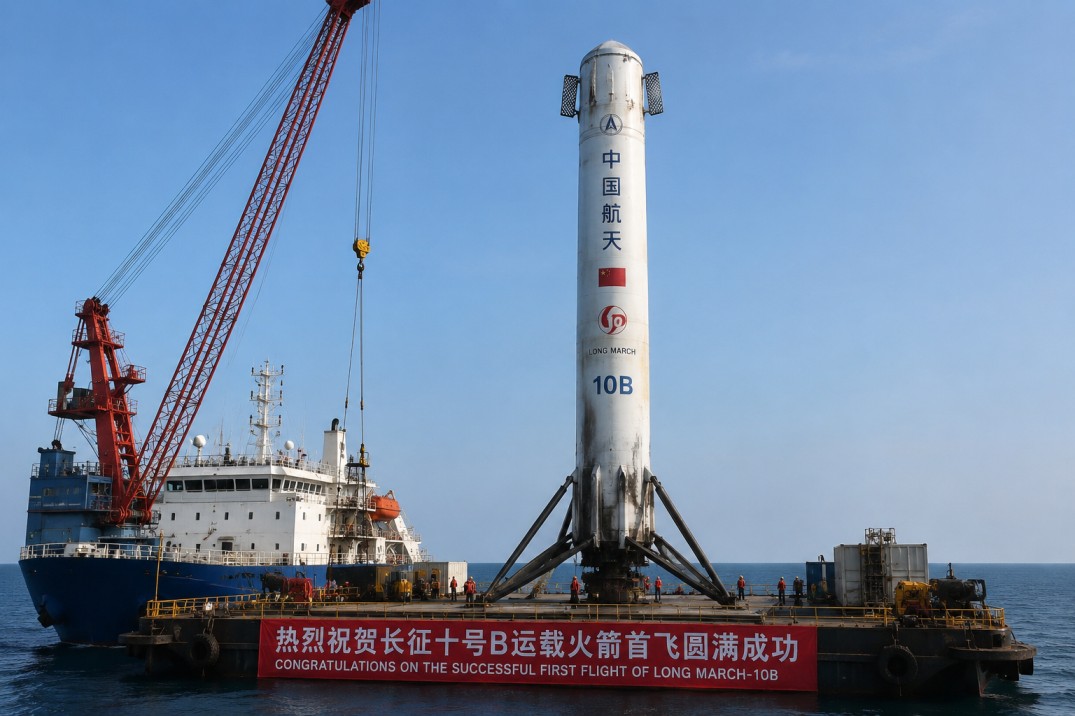
China has reached a significant milestone in space exploration by successfully recovering the Long March 10B rocket after its inaugural orbital mission. This accomplishment positions China as the second country, following the United States, to demonstrate dependable reusable orbital rocket technology, underscoring the nation’s advancements in space capabilities.
The Long March 10B, a towering 63.6-meter rocket, launched from the Hainan International Commercial Aerospace Launch Center, utilizing seven engines powered by liquid oxygen and kerosene to lift off. Once the stages separated, the second stage, equipped with a liquid oxygen-methane engine, carried on with the mission and effectively delivered a satellite into its planned orbit, showcasing the rocket’s sophisticated engineering.
In addition to the primary mission objectives, this launch marked a world-first achievement in reusable launch technology. The mission successfully employed a wire arrestment recovery system to retrieve an orbital-class rocket, a groundbreaking development that highlights China’s growing prowess and innovative approach in the space industry.
This advance not only reflects China’s commitment to enhancing its space program but also signals its expanding role on the global stage of space exploration. As the nation continues to develop its reusable launch capabilities, the successful recovery of the Long March 10B rocket sets a precedent for future missions and further solidifies China’s position as a leader in space technology.