
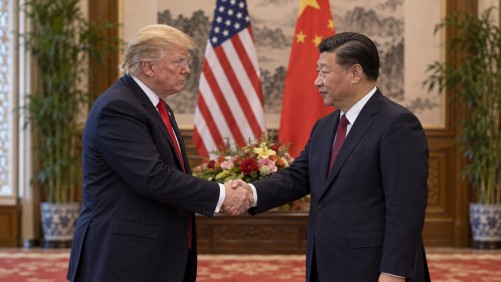
U.S. President Donald Trump and Chinese President Xi Jinping are scheduled to meet in the United States amid ongoing tensions between Washington and Beijing on several critical issues including trade, artificial intelligence (AI), technology restrictions, and Taiwan. This meeting marks the second direct interaction between the two leaders this year, as both nations strive to manage their strategic rivalry while keeping channels of communication open.
Among the topics on the agenda, artificial intelligence is anticipated to be a focal point. U.S. officials have suggested establishing a framework for dialogue with China concerning AI safety and governance. While both countries express interest in cooperation, they hold divergent views on the risks and progression of AI technology. The U.S. has implemented restrictions on China’s access to advanced semiconductors vital for AI development, a move Beijing interprets as an attempt to hinder its technological advancements.
Trade relations also remain a contentious area, with a temporary U.S.-China trade agreement set to expire in November. This deal currently includes tariff measures and restrictions on Chinese rare-earth exports. While Beijing seeks long-term stability in trade relations, Washington views ongoing trade restrictions as leverage in negotiations.
Taiwan continues to be a significant point of disagreement. The U.S. maintains close defense ties with the island, which China regards as part of its territory, opposing any U.S. arms sales to Taipei. Future discussions between Trump and Xi are likely to address the sensitivity surrounding U.S. weapon sales to Taiwan.
Beyond bilateral issues, the leaders are expected to address broader international concerns, such as the conflicts in Iran and Ukraine. China’s economic ties with Iran and its close relationship with Russia are likely to be part of these discussions. The meeting underscores the complexity of the U.S.-China relationship as both nations navigate their differences while acknowledging the impact of their actions on global trade, technology, and security.