
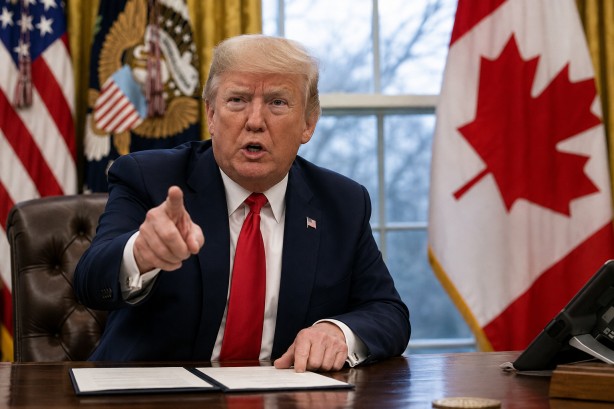
In a sharp escalation of trade tensions, US President Donald Trump has criticized Canada after negotiations between the two nations reached an impasse. This breakdown has led to heightened trade disputes, with the United States implementing 50% tariffs on approximately $20 billion of Canadian goods. The affected items span a variety of products, prompting Canadian Prime Minister Mark Carney to promise reciprocal tariffs. Carney has declared that Canada will not yield to the terms set by Washington.
Carney characterized the unfolding situation as a trade war, accusing the United States of economic aggression against Canada. In response, US Trade Representative Jamieson Greer justified the tariffs, arguing that they are essential to safeguard American workers and maintain supply chain integrity. The escalating conflict has sparked concerns among businesses and legislators in both countries.
Canadian business organizations have expressed alarm, warning that the tariffs could lead to substantial revenue losses for exporters and small enterprises. Similarly, US lawmakers from states bordering Canada have raised issues about potentially increased costs for businesses, farmers, and consumers due to the new tariffs.
Canada is set to implement its retaliatory tariffs on September 8, targeting products such as steel, dairy items, appliances, and electronics. These measures are seen as a direct response to the US tariffs and are part of Canada’s strategy to counter the economic impact of the trade policies enacted by the United States.
This rising trade conflict has also cast uncertainty over the future of the US-Mexico-Canada trade agreement, a crucial framework governing much of North America’s trade activity. As tensions continue to grow, the stability and terms of this agreement are increasingly in question, affecting economic relations across the continent.