
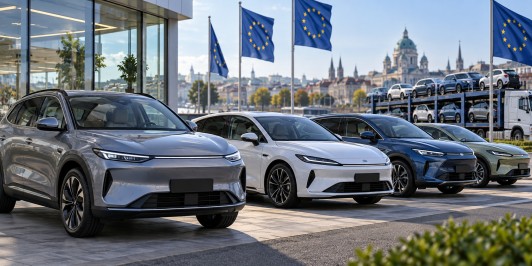
Sales of Chinese-made hybrid cars in the European Union have skyrocketed, with statistics indicating a dramatic rise from 659 fully hybrid vehicles sold in 2022 to 160,662 within the first seven months of 2026. This surge has intensified concerns in Brussels regarding the mounting competition faced by European carmakers.
The increase in Chinese-made plug-in hybrids has been equally striking, climbing from 56,706 units in 2022 to 217,764 in the same 2026 period. This growth trend accelerated after the European Union imposed anti-subsidy tariffs on Chinese electric vehicles in 2024, a move that inadvertently boosted the appeal of hybrid vehicles, which were not subject to the same tariffs.
The European Commission has responded by urging China to self-regulate its hybrid vehicle exports to the EU. An agreement has yet to be reached, and the EU is contemplating safeguard measures, including potential quotas, to protect its automotive industry. Meanwhile, Chinese companies are rapidly capturing market share. BYD, Chery, and Leapmotor have all reported significant sales increases, with Geely leading as the largest Chinese automotive group in the European market.
BYD’s sales in the EU have surged to approximately 177,000 vehicles, reflecting a substantial year-on-year rise. Geely has sold about 205,000 vehicles in the first eight months of 2026. Despite this, European manufacturers still retain the largest overall market share. Currently, hybrid vehicles constitute nearly 37% of the European car market, surpassing the just over 21% share held by fully electric vehicles.
This influx of Chinese vehicle imports is occurring amid the EU’s broader efforts to address its widening trade imbalance with China and safeguard the competitiveness of its domestic car industry.