
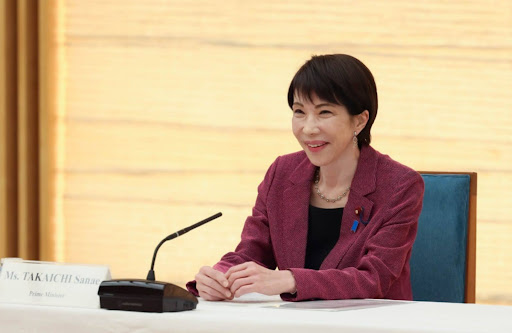
Japan’s historic dependence on Middle Eastern oil has once again been thrown into sharp relief, as Prime Minister Sanae Takaichi announced the biggest-ever release from the country’s strategic reserves — 80 million barrels to be delivered to refiners from this Thursday. The US-Israel military campaign against Iran has endangered the flow of crude through the Strait of Hormuz, threatening the supply chains that keep Japan’s economy running. For Tokyo, this is not a distant geopolitical event but an immediate domestic emergency.
Japan imports more than 90% of its crude from Middle Eastern producers, a dependency that makes the country deeply sensitive to any instability in the region. The government has spent decades building up reserves to provide a buffer against exactly this kind of disruption, and the current deployment — equivalent to 45 days of national consumption — represents those preparations paying off. Japan’s total reserve base of approximately 470 million barrels ensures that even this massive release does not exhaust the country’s emergency supply.
The 80 million barrel release is nearly double the previous record set during the 2011 Fukushima crisis, when Japan was forced to temporarily close all its nuclear power plants following earthquake damage. That disaster created the previous benchmark for emergency oil deployment in Japan; the current release comfortably surpasses it. Energy officials have described the scale of the response as proportionate to the seriousness of the threat.
The government has also moved to protect consumers from oil price shocks, introducing subsidies that will cap gasoline at approximately ¥170 per litre — a significant reduction from the record high of ¥190.8. The subsidy level will be reviewed weekly and calibrated to reflect ongoing market changes. These measures are expected to provide tangible relief to the 125 million Japanese citizens directly affected by fuel costs.
Diplomatically, Takaichi has been clear that Japan’s response will not include military action, declining Trump’s proposal for naval deployment to the Hormuz region. She cited Japan’s postwar constitution as the definitive constraint on overseas military involvement. Japan’s diplomatic weight, however, remains substantial, and Takaichi has committed to using it fully in pursuit of a peaceful resolution to the Middle East conflict.