
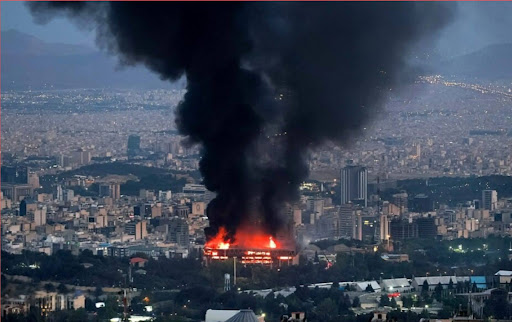
Iran was playing a long game in its war with the United States, and the US might be losing it — that was the assessment offered by analysts at the International Crisis Group on Saturday, even as American warplanes continued to bomb Iranian territory and President Trump projected confidence in public statements. The group’s Iran expert Ali Vaez described Tehran’s strategy as a deliberate three-part plan: ensure the regime’s survival, maintain enough military capacity to stay in the fight, and prolong the conflict until better negotiating terms could be secured. Three weeks in, Iran appeared to be executing that plan successfully.
Despite weeks of devastating bombing that had killed senior leaders and badly damaged infrastructure, Iran’s regime remained structurally intact and operationally coherent. Its military was still launching ballistic missiles at the UAE, firing rockets at Israel, threatening Gulf energy facilities, and coordinating attacks on the US embassy in Baghdad — all while maintaining the closure of the Strait of Hormuz that was pushing global oil prices toward $120 per barrel. Analysts said this level of operational activity was not consistent with a military approaching collapse.
US warplanes struck Kharg Island on Saturday for the second consecutive day. Trump said in public remarks the island had been effectively demolished, while calling on allied nations to send warships to the Strait of Hormuz. He named China, France, Japan, South Korea, and the UK. His appeal was widely seen as the first public admission that reopening the strait might require international help rather than unilateral American action. Trump simultaneously ruled out negotiations, saying the current terms were not good enough.
Iran’s missiles struck Fujairah in the UAE, forcing suspension of oil operations. Iranian commanders warned civilians to evacuate near UAE ports and US installations. Israel conducted dozens of raids inside Iran, killing at least 15 people in Isfahan. Iran fired rockets at Israel in return. US Defence Secretary Pete Hegseth described Iran’s leadership as “desperate and hiding” and claimed the new supreme leader had been wounded. Iranian officials confirmed the injury but dismissed its severity.
The human cost of the conflict underscored the urgency of finding an exit. More than 1,400 Iranians had been killed in the bombing. Thirteen Israelis and roughly 20 Gulf residents had died. Lebanon’s crisis continued, with 800 killed and 850,000 displaced from Israeli strikes on Hezbollah. Six US troops died in an aircraft crash in Iraq. The US embassy in Baghdad was struck, and Americans in Iraq were ordered to leave. If the International Crisis Group’s analysis was correct, the conflict had considerably further to run — and its costs would continue to grow.